

 Image 1 of 2
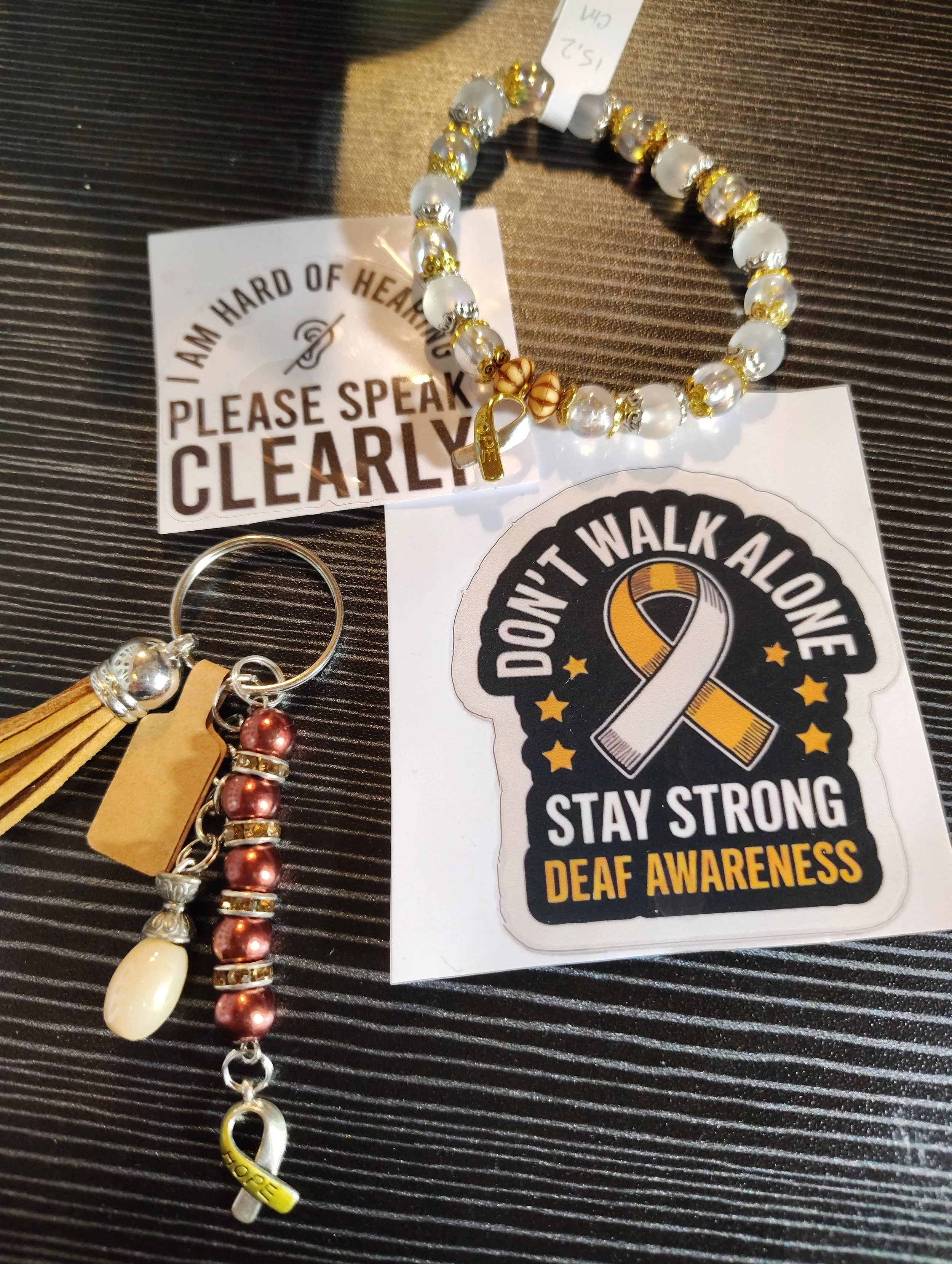 Image 2 of 2
Deaf and Hard of Hearing
Deaf and hard of hearing (DHH) describes a diverse group of people with varying degrees of hearing loss, communication preferences, and cultural identities. Understanding the distinctions, common needs, and respectful practices helps create inclusive environments in education, work, healthcare, and everyday life.
Definitions and distinctions
Deaf (capital D): Often denotes people who identify with Deaf culture and use sign language as a primary language. Deafness can be viewed as a cultural and linguistic identity rather than merely a medical condition.
deaf (lowercase d): Refers to the audiological condition of not hearing; some who are deaf may not identify with Deaf culture.
Hard of hearing: People with partial hearing loss who may use spoken language, hearing aids, cochlear implants, assistive listening devices, and/or sign language to communicate.
Meniere’s disease is a chronic inner-ear disorder that affects balance and hearing. It often presents as sudden, unpredictable episodes of vertigo, fluctuating hearing loss (usually in one ear), tinnitus (ringing or roaring in the ear), and a feeling of fullness or pressure in the affected ear. Symptoms can range from mild to severe and may significantly disrupt daily life, work, and emotional well-being.
This one is personal. I am losing my hearing and balance due to Meniere’s Disease. Help raise awareness to the Deaf and Hard of Hearing communities.
Each set contain at least 3 items. Items Vary.
For more information about the Deaf and Hard of Hearing community, go to:
For information on Meneire’s Disease, go to:
Deaf and Hard of Hearing
Deaf and hard of hearing (DHH) describes a diverse group of people with varying degrees of hearing loss, communication preferences, and cultural identities. Understanding the distinctions, common needs, and respectful practices helps create inclusive environments in education, work, healthcare, and everyday life.
Definitions and distinctions
Deaf (capital D): Often denotes people who identify with Deaf culture and use sign language as a primary language. Deafness can be viewed as a cultural and linguistic identity rather than merely a medical condition.
deaf (lowercase d): Refers to the audiological condition of not hearing; some who are deaf may not identify with Deaf culture.
Hard of hearing: People with partial hearing loss who may use spoken language, hearing aids, cochlear implants, assistive listening devices, and/or sign language to communicate.
Meniere’s disease is a chronic inner-ear disorder that affects balance and hearing. It often presents as sudden, unpredictable episodes of vertigo, fluctuating hearing loss (usually in one ear), tinnitus (ringing or roaring in the ear), and a feeling of fullness or pressure in the affected ear. Symptoms can range from mild to severe and may significantly disrupt daily life, work, and emotional well-being.
This one is personal. I am losing my hearing and balance due to Meniere’s Disease. Help raise awareness to the Deaf and Hard of Hearing communities.
Each set contain at least 3 items. Items Vary.
For more information about the Deaf and Hard of Hearing community, go to:
For information on Meneire’s Disease, go to: